Where most teams start
Scattered AI use
Each person handles AI differently. A few are getting results, but there is no shared tool, no shared approach, and no agreed rules for sensitive information.
01 · Assess
AI opportunities are identified
I talk with your team about their daily work, review how work moves between people, and diagnose where AI can help first. Everything that follows has a foundation in real data, so the work covers what your team needs versus generic content and methods.
02 · Align
Leadership sets the vision and the rules
The leadership team agrees on the vision, goals and success measures for using AI, adopts a plain-language AI policy and data rules, and names the person who will own AI internally.
03 · Equip
Every team is trained on its own work
Hands-on sessions, run in several rounds with each team on its own tasks, turn AI from something people tried once into something they use every week. Multiple sessions ensure the learning sticks and give teams time to apply what they learn.
04 · Explore
Redesign the work together
Once we have a shared foundation, small groups take on the workflows that take the most time. We test a few approaches in the tools your team already uses, each group chooses the one that works best, and they own the setup from there.
Where your team arrives
Everyone uses AI confidently, inside the same rules
Every person uses AI on their actual tasks each week, the rules are in place, and someone inside the company owns the work going forward.
Reclaim your team’s time for the work they enjoy.
AI should be taking work off your team’s plate. However, most teams are using it for emails and quick questions, and busy people rarely find time to go further on their own. That’s where I step in. I help your whole team use AI on the work that fills their day, with clear rules for sensitive information.
If you’re like most owners and operations leaders I meet, this might feel familiar.
See how your team’s time adds upThere isn’t enough time
It doesn’t feel like there are enough hours in the day or week to get everything done.
Your team is under pressure
Everyone is working hard and trying to keep up, but your team is tired and overloaded at every step.
Everything depends on a few people
A small number of people carry more than their share to keep all of the work running smoothly.
Planning gets pushed aside
Reacting to every urgent item means there is no time to step back and plan for the future.
Projects keep slipping
Important projects, and the ones your team would actually enjoy, keep getting pushed to next month.
The fix feels impossible
Finding the time for a big initiative or new system feels out of the question right now.
Another hire feels like the only answer
You’re weighing more headcount, which is expensive and time-intensive.
Your team needs a guide
Owners and operations leaders often expect getting their team to use AI to be a large, difficult initiative. In practice, most teams are already experimenting, one person and one question at a time.
The real progress comes when that individual AI use turns into shared workflows the whole team runs the same way, under the same rules.
I guide that shift by coaching each team how to use AI in their own work, in a few sessions rather than a lengthy program.
From scattered to shared
The Oplos AI Roadmap
A consistent, proven method, tailored to the work your team does every day, built from dozens of client projects.
What changes when we work together
Tedious work no longer eats the day
Recurring tasks that used to take all day now take a few hours, and that time goes back to serving your clients or to new work, without adding headcount.
Everyone uses AI in their own work
AI use is no longer limited to the enthusiasts who were already experimenting. Each person has built it into the tasks they do every day.
Everyone plays by the same rules
Your team knows how to handle your client data and other sensitive information, so they can work with confidence to get results quickly.
Your team is prepared to keep going
Your team knows the tools well enough to keep using them, and to adjust their workflows as the work and the tools continue to evolve, without depending on me or a developer.
Is this the right kind of help?
Owners and operations leaders usually try one of four routes to get their team using AI: work it out internally, send people to training, implement a niche tool, or have something built. Each has its place.
Start with general tool training if your team has the time to then figure out how to apply that training to their work.
Look at a specialist vendor if you need AI for one specialized function.
Work with a developer if you need a custom application built and maintained.
Work with Oplos if you need someone who can learn your work, understand your team, and guide everyone to use AI on the work that fills their day, with clear rules for sensitive information.
Not sure which fits? That’s what we discuss in the first call.
What changed for teams I have worked with
“Every single person is using AI at Prosper in increasingly deeper and more strategic ways.”

J.W. Carpenter, President
“As a small engineering company, we needed solutions that actually fit how we work, not theoretical concepts, and Oplos delivered.”

Keith Owens, President
“We were committed to adapting to AI but had no success on our own. Oplos made this process easy to understand and ensured we succeed.”

Blake McAnally, President









I started Oplos to help busy teams reclaim their time.
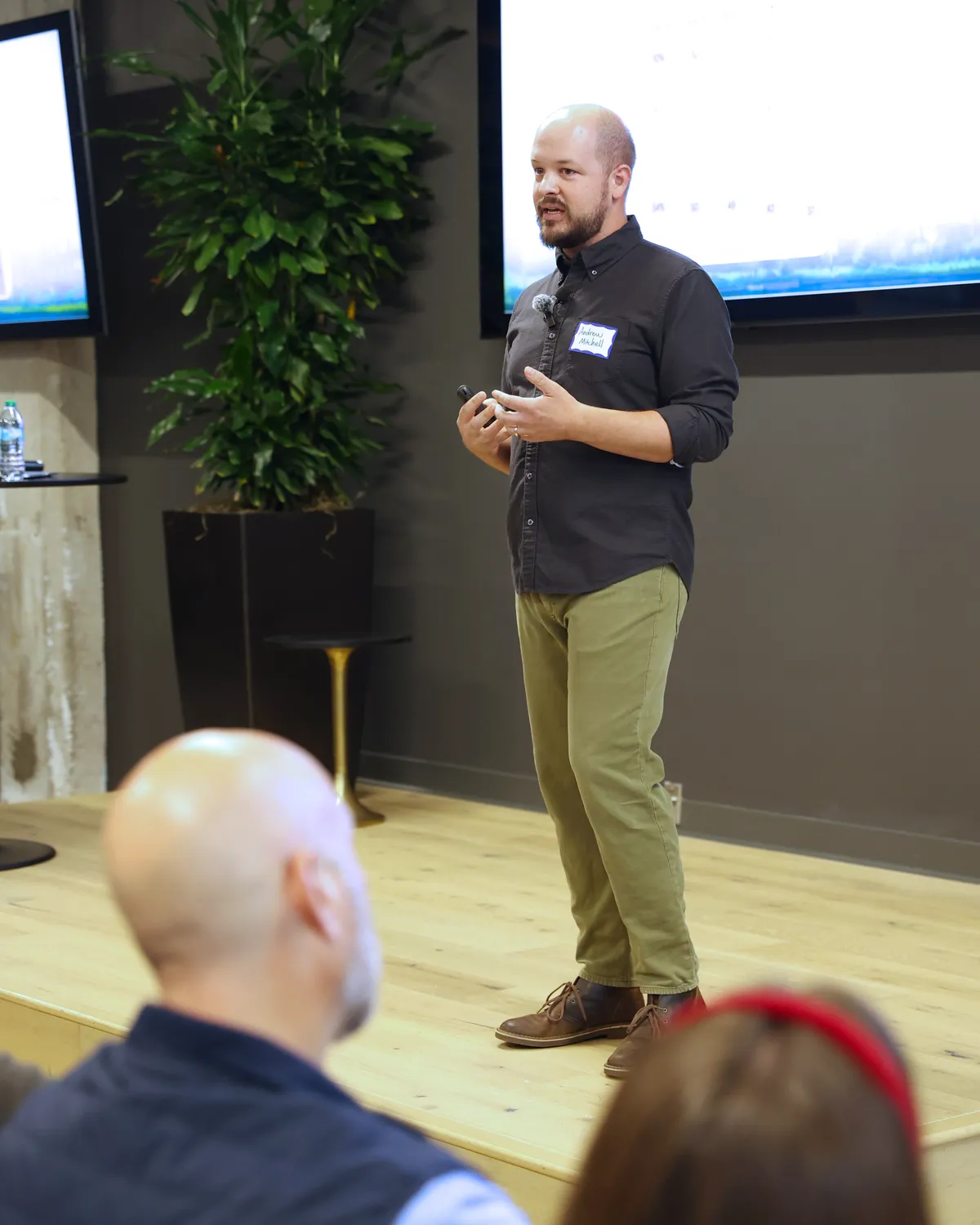
I’m Andrew Mitchell. I’ve spent my entire career helping people understand and use new tools. Before founding Oplos, I developed and deployed change strategies at Deloitte for Fortune 500 companies and some of the largest healthcare providers in the country. I started Oplos to bring that experience to owners and operations leaders whose teams are stretched thin, so the whole team can use AI on the work that fills their day.
More about AndrewReady to reclaim your team’s time?
Start with a 30-minute conversation about your team, where their time goes today, and whether I’m the right fit to help. If I’m not, I’ll point you to the kind of help that fits better.
Schedule a 30-minute call